


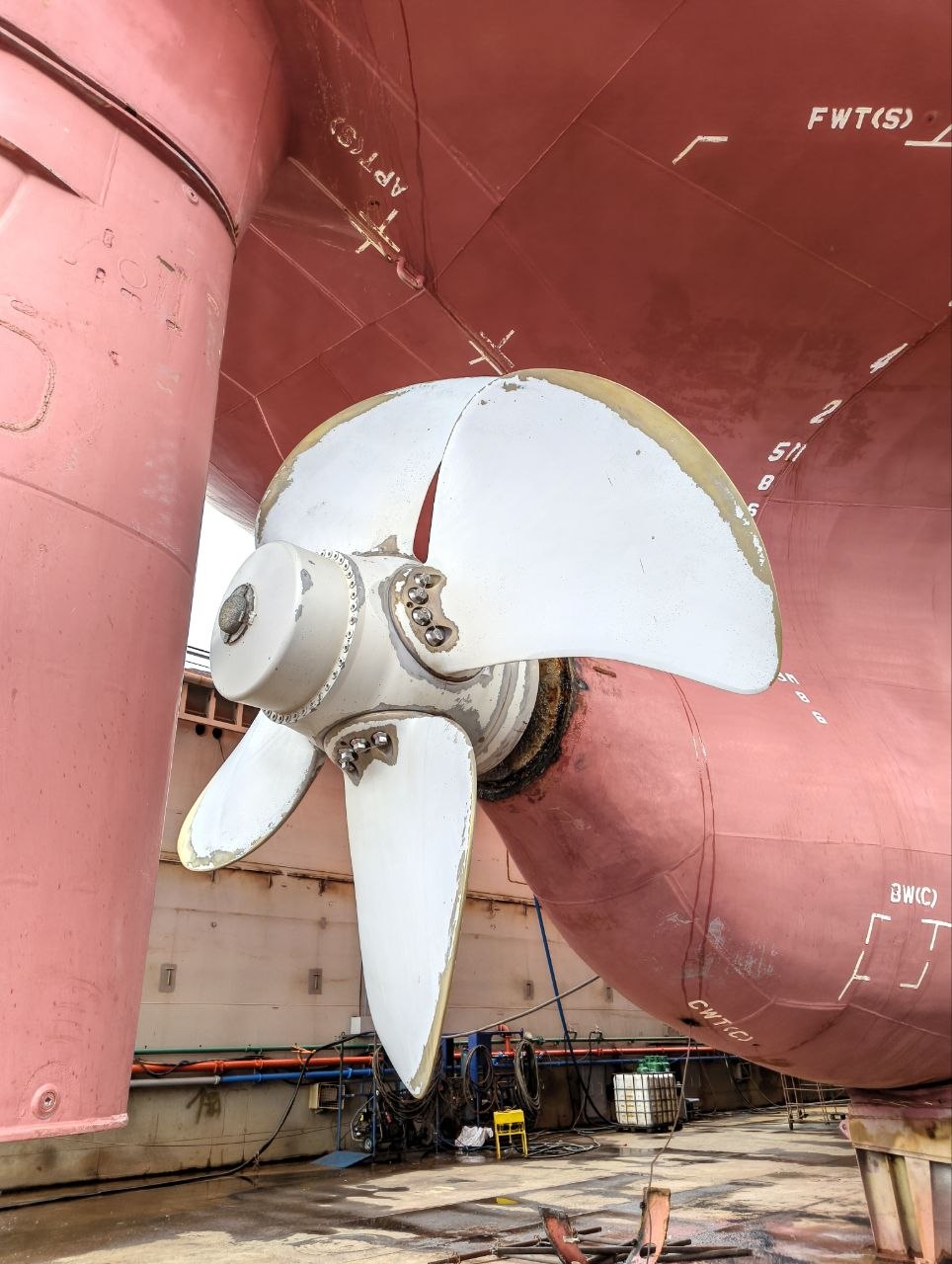
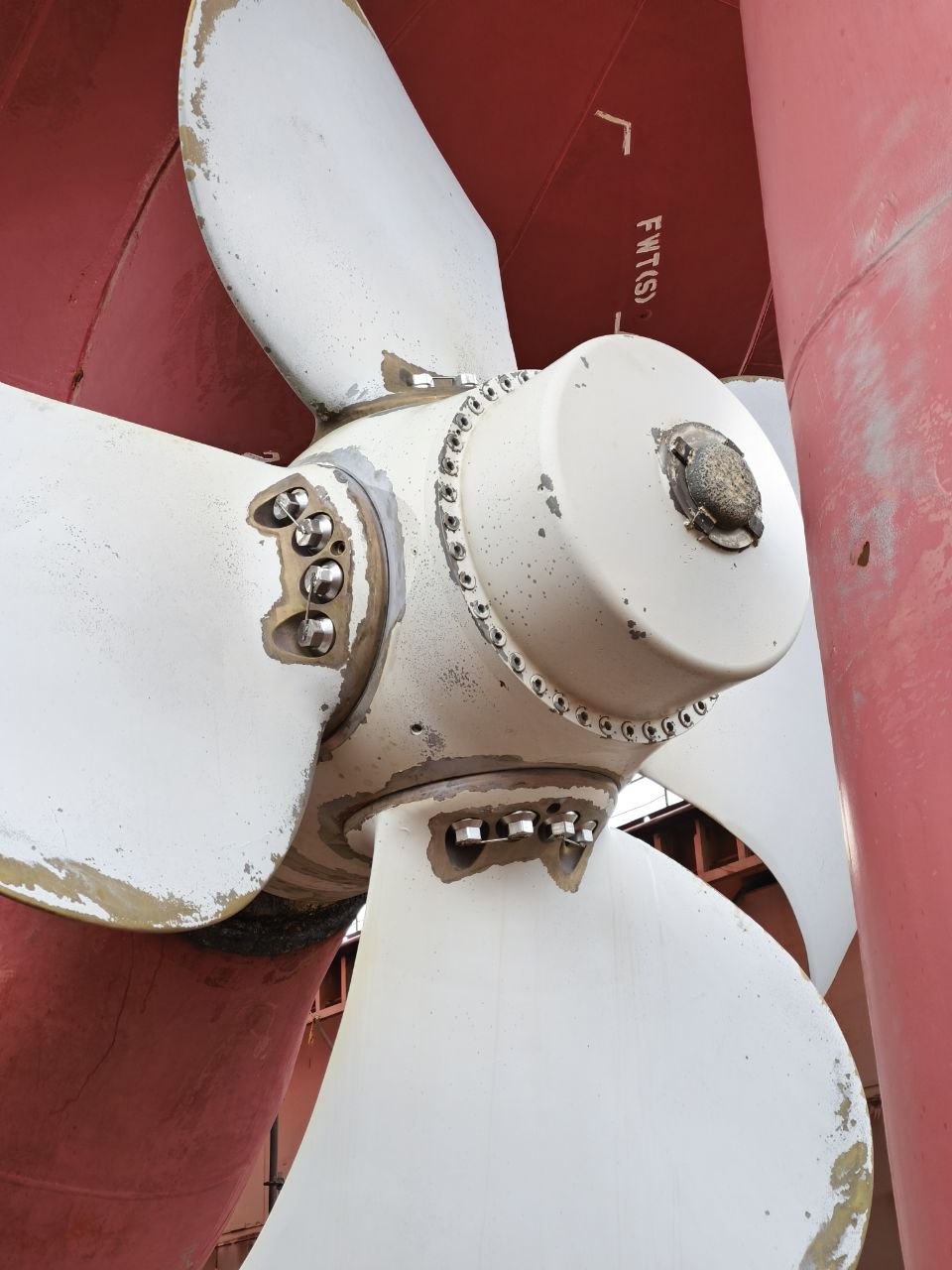
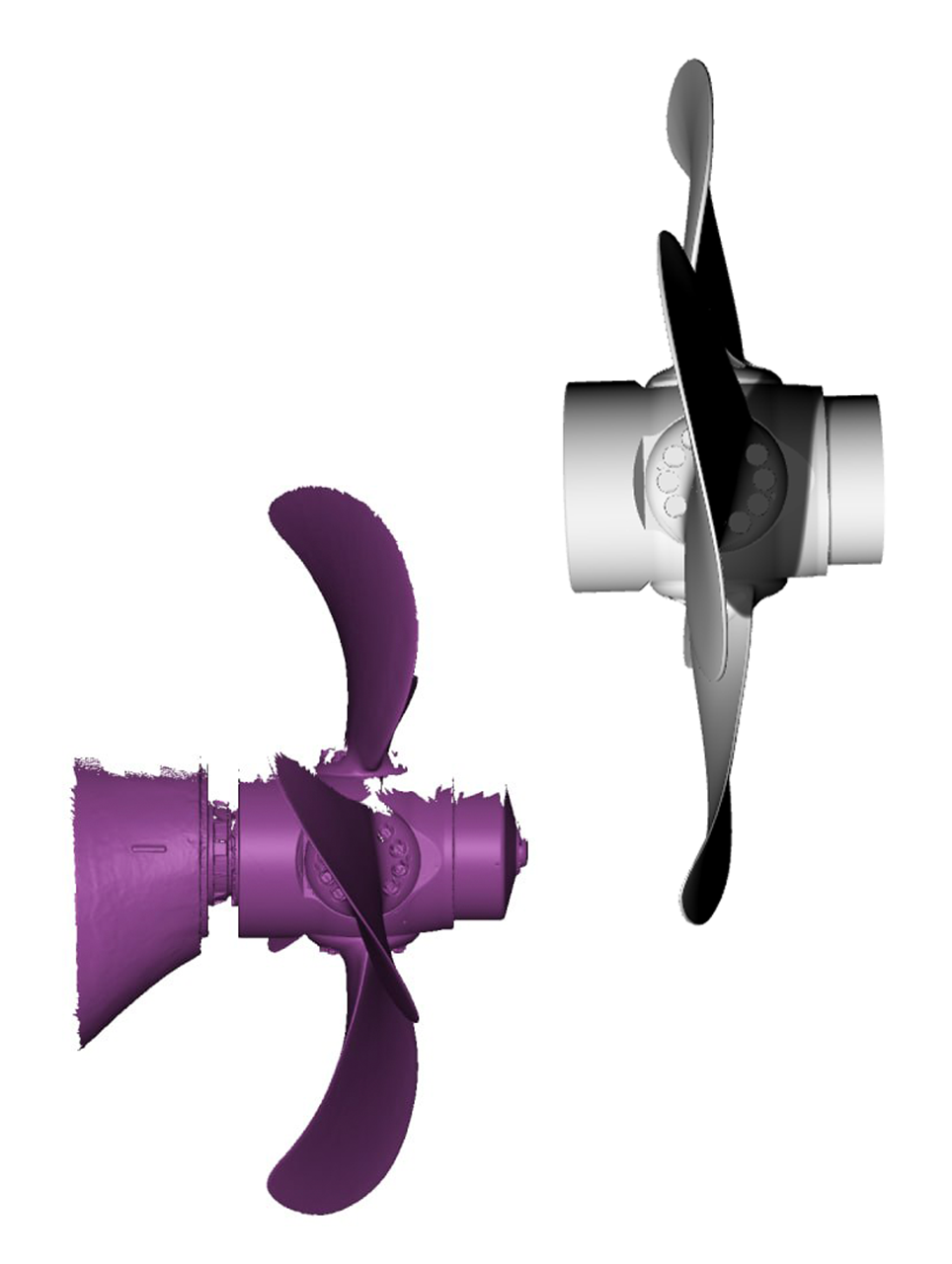
Marine engineering is another field where 3D technology makes it possible to achieve high precision and speed up engineering processes. Recently, we had the opportunity to work together with a shipbuilding and repair company based in Klaipėda. They approached us with a request to accurately digitize a controllable-pitch ship propeller for further engineering analysis and simulations.
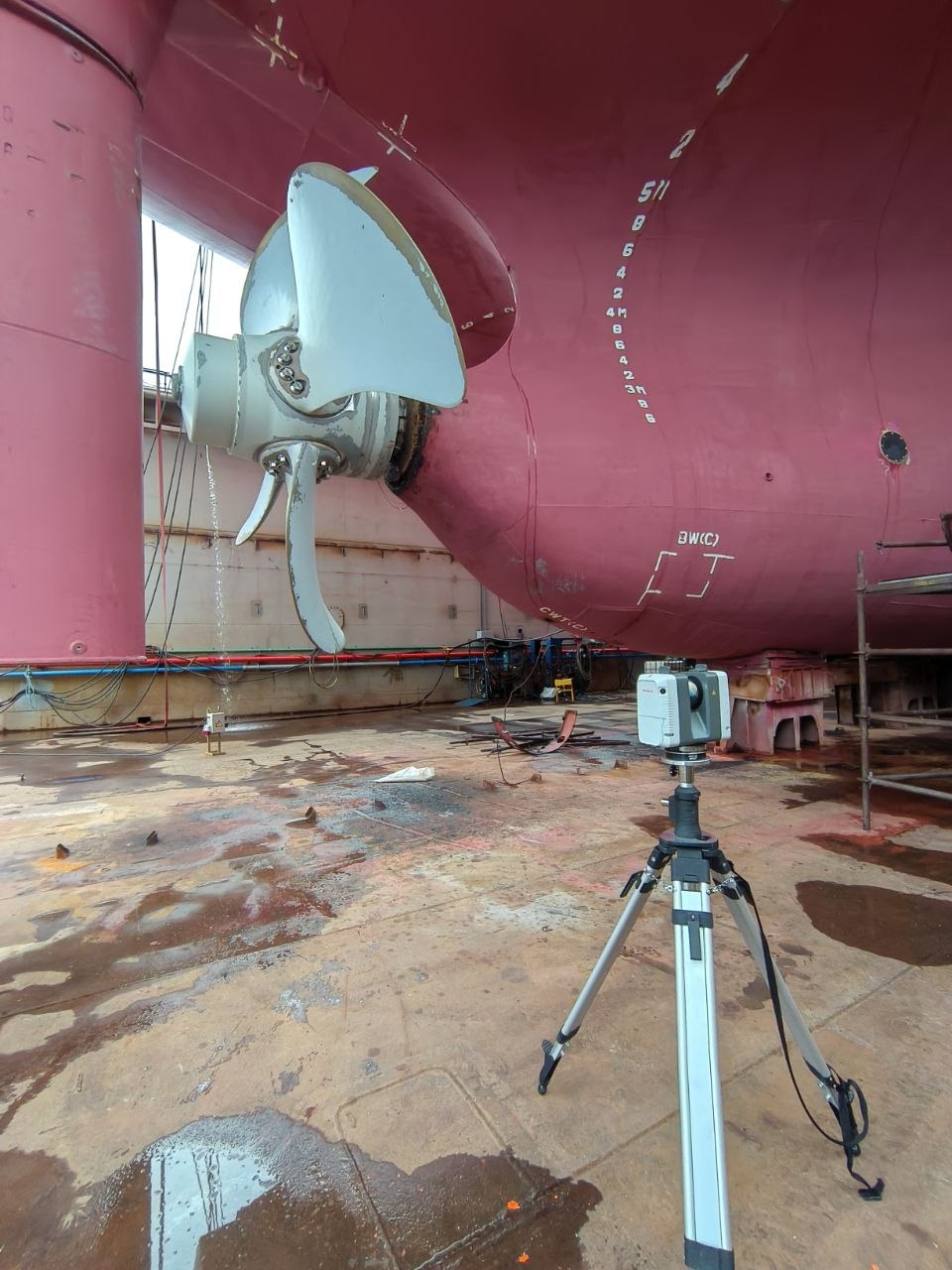
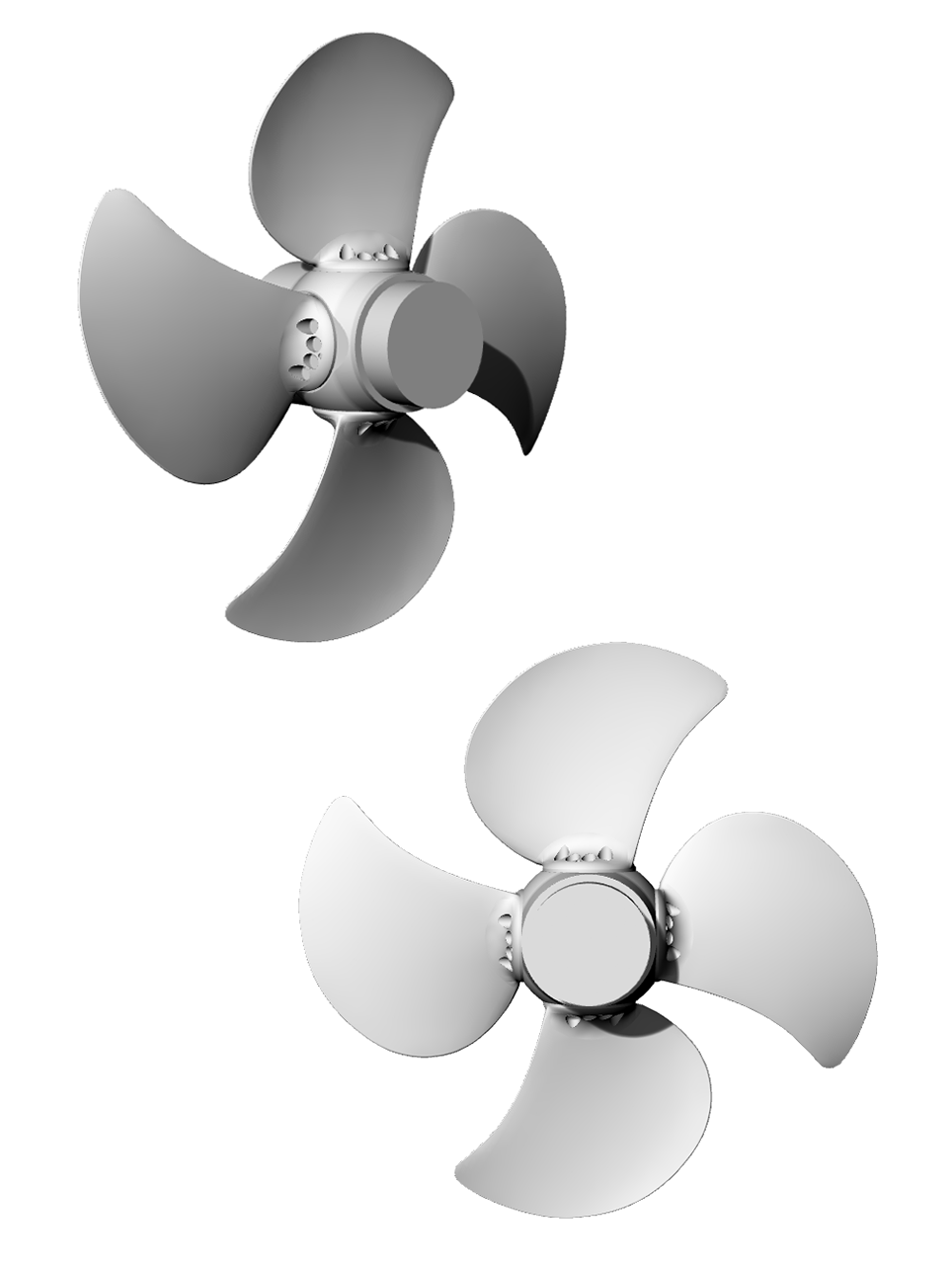
For this project, we used high-precision 3D scanning technologies, including the handheld “Artec Leo” scanner, which captures intricate details with high precision (up to 0.1 mm). We also opted for the long-range “Artec Ray II” scanner, known for its accuracy of up to 0.7 mm, which is particularly valuable in reverse engineering. One propeller blade was scanned separately and can later be used to reconstruct the entire propeller by accurately recreating its installation angle. In addition, the complete propeller was scanned in three different positions, representing different blade pitch angles.
The high-resolution 3D data obtained allows for precise analysis of the propeller’s geometry, reconstruction of its design, and the use of digital models for various hydrodynamic simulations, structural calculations, and further engineering development.
Projects like this clearly demonstrate how 3D scanning and reverse engineering help preserve the geometry of complex mechanical components while significantly accelerating engineering workflows.
Propeller dimensions (length x width): 4571 x 4571 mm.