


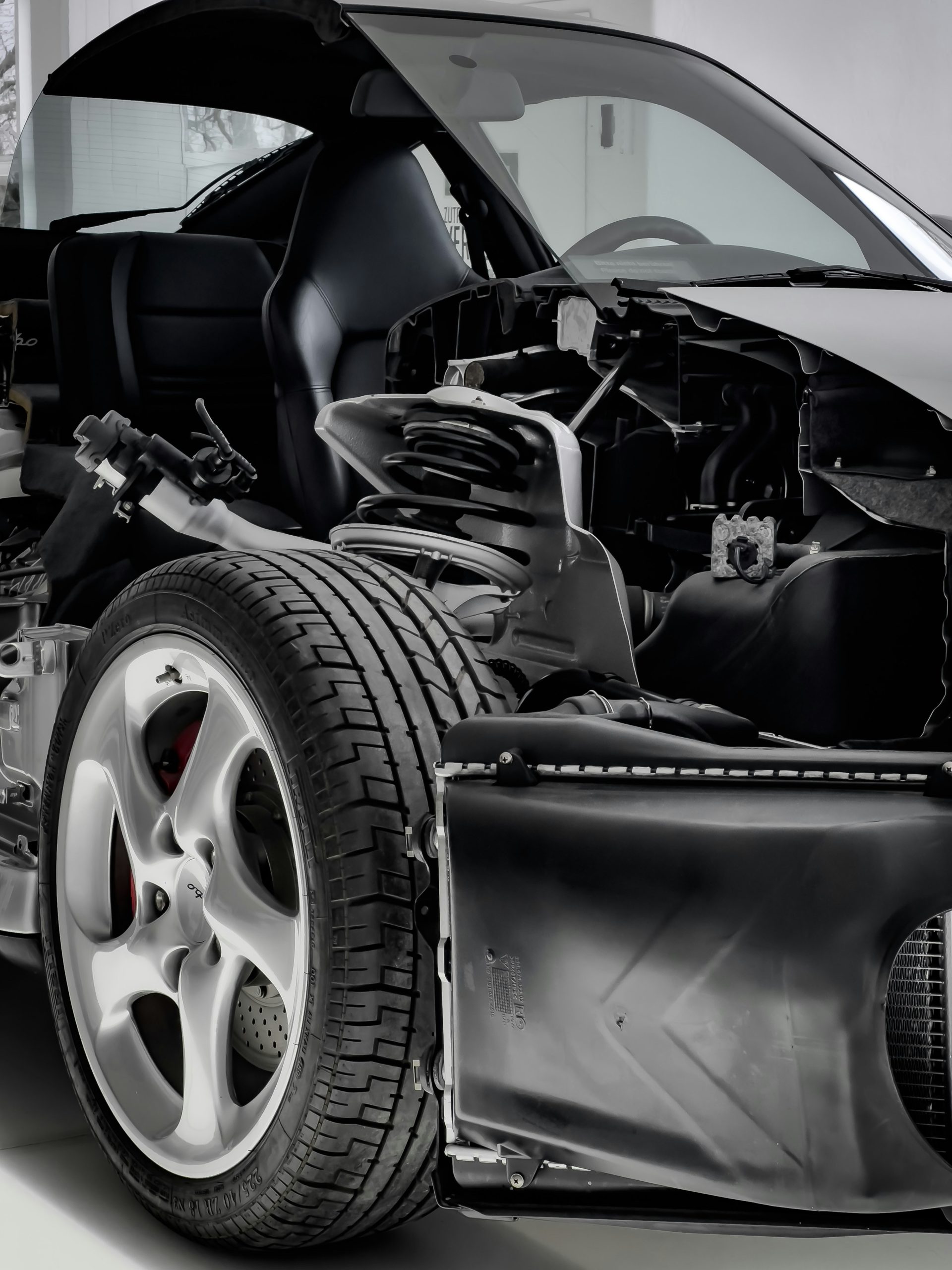
3D Scanning and Reverse Engineering in the Automotive, Marine, Furniture, and Mechanical Engineering Industries
In the automotive, marine, furniture, and mechanical engineering industries, professionals often face the same challenge – the need to recreate or refine a part for which drawings never existed or have long been lost. 3D scanning and reverse engineering make it possible to turn a physical object into a precise digital model that can be used for repair, manufacturing, or further design work.
Why these industries need 3D scanning and reverse engineering

Measuring complex mechanical assemblies or uniquely shaped parts with traditional tools is often inaccurate or simply impossible. 3D scanning makes it possible to:
- capture the precise geometry of an existing part in a short time, down to 0.025mm, even if its shape is complex or irregular;
- create a CAD model for a part whose drawings don't exist or no longer match its actual condition;
- verify that a manufactured or repaired part precisely meets requirements;
- prepare documentation for further design or production stages.
Automotive, marine, and furniture industries: use cases
In these fields, reverse engineering is most often used when:
- an old, discontinued automotive or marine part needs to be recreated because it can no longer be purchased on the market;
- when designing custom solutions, a new part needs to be precisely fitted to an existing structure;
- furniture manufacturing requires recreating a complex-shaped element based on an existing sample or an old piece;
- restoring historic vehicles or vessels (classic cars, boats), where it's important to preserve the original shape and proportions.
Mechanical engineering: recreating complex assemblies
Industrial equipment often uses parts whose manufacturer is long out of business, or which are simply no longer produced. In such cases, 3D scanning makes it possible to:
- scan a worn or broken part and use it to create a precise 3D model;
- check tolerances and contact surfaces so the new part fits the mechanism precisely;
- prepare the model for production – whether for 3D printing or traditional machining.
This helps shorten downtime when equipment failure depends on a single hard-to-find part.
How the process works
Depending on the size, shape, and required precision of the part, we select the most suitable scanning technology. The collected data is processed and converted into a CAD model that can be edited, checked against tolerances, and used for further design or production. If needed, the model is further adjusted to meet functional requirements, not just the visual shape of the original.
How we can help
If you're looking for a way to recreate a hard-to-find part, verify the accuracy of a manufactured part, or need a CAD model of an existing object with no available drawings, we can offer the most suitable 3D scanning and reverse engineering solution. Learn more about our services on our 3D scanning services page.

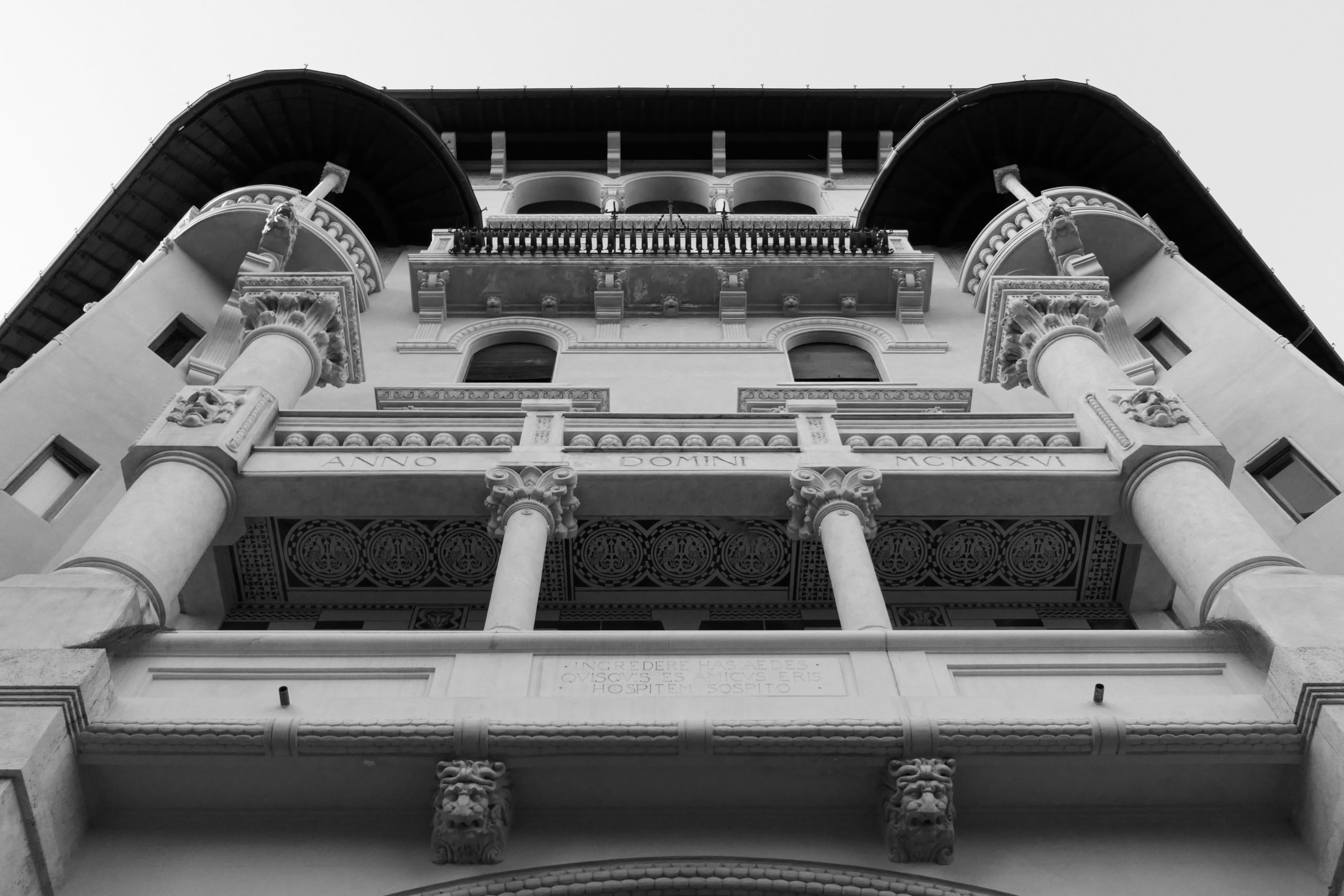
3D Scanning and Reverse Engineering in Architecture and Restoration
In architecture and restoration work, professionals often deal with things that were never documented – old buildings, ornaments, or details whose original drawings no longer exist. 3D scanning and reverse engineering make it possible to precisely capture the current condition and recreate lost or damaged elements, even when the only remaining source is the physical site or object itself.
Why 3D scanning is useful in architecture and restoration
Traditional manual measurements are time-consuming and often prone to inaccuracies, especially with complex shapes – moldings, sculptural details, non-standard façades, or structures that have warped over time.

3D scanning allows you to:
- capture the exact geometry of the current condition in a short time, even in hard-to-reach places;
- obtain data suitable for both documentation and further design work;
- detect deformations, settling, or damage that would go unnoticed with manual measurement;
- create a digital twin of the object that remains intact even if the physical object changes or deteriorates over time.
What can be scanned
3D scanning in architecture and restoration is used for objects of various scales – from entire rooms and façades to small decorative elements:

- building façades, interior spaces, and structural elements;
- moldings, cornices, ornaments, and other decorative details;
- sculptures and art objects;
- details of historic buildings that require a precise digital archive.
Reverse engineering: when drawings are missing or a part is damaged
In restoration projects, it is common to need to recreate an element whose original drawings have not survived, or to manufacture a missing part based on a remaining – often damaged – sample. In such cases, reverse engineering makes it possible to:
- scan the surviving (even partially damaged) part and use it to create a precise digital model;
- digitally reconstruct missing parts based on symmetry or analogous elements;
- prepare the model for production – whether it will be 3D printed or manufactured using traditional methods.
This is especially relevant when working with heritage objects, where every element must be recreated as accurately as possible while preserving its original form.
How the process works
Depending on the size of the object and the complexity of its shape, we select the most suitable scanning technology and equipment. The collected data is processed and converted into precise 3D geometry, which can be used for documentation as well as further design or production. If needed, missing or damaged parts are digitally reconstructed so that the final model matches the original design.
How we can help
If you are preparing documentation for a building or object, planning restoration work, or need to recreate a missing part based on an existing sample, we can offer the most suitable scanning and reverse engineering solution for your project. Learn more about our 3D scanning services on our 3D scanning services page.

Even Greater Capabilities with the Large-Format Form 3L SLA Printer!
3D printing is a rapidly evolving field, so we're constantly working to improve the quality of the services we provide. Among our latest 3D printing equipment additions is the Formlabs Form 3L, which runs on an enhanced dual-laser technology (Low Force Stereolithography).
One of the Form 3L's biggest advantages is its large build volume (335 x 200 x 300 mm), which allows us to print both large models and many small parts within a single project. What's more, the printed parts feature a smooth surface, fine detail, and sharp edges. On top of that, the printing process can be monitored remotely and requires no constant supervision. In other words, the Form 3L maintains ideal printing conditions even while running continuously, and can produce flawless-quality parts.
Learn more: https://bit.ly/37Iv8AT

Precision Metrological 3D Scanning Now Available at 3D Creative!
3D Creative is now the official provider of highly precise metrological Kreon 3D scanning services and an authorized equipment representative in the Baltic States.
Kreon was the first company to develop Blue Laser technology, which allows complex, glossy surfaces, as well as products of various shapes and colors, to be scanned without any additional preparation. What's more, our combination of a measuring arm and a 3D scanner ensures scanning accuracy of up to 9 µm!
Modern metrological 3D scanning allows us to precisely evaluate the size and shape of objects and carry out highly accurate measurements. We can now offer our clients advanced and highly effective solutions for CAD measurement analysis, reverse engineering, quality control, 3D measurements, and more.
Learn more about metrological 3D scanning: https://bit.ly/3D6gY7S

3D Creative – Awarded Artec 3D Gold Certified Partner Status
We're delighted to have once again successfully defended our Gold Certified Partner status with Artec 3D, the world-renowned manufacturer of professional 3D scanning hardware and software.
To maintain this status, we took part in a rigorous testing process designed to demonstrate excellent knowledge of Artec 3D scanners and software, and to confirm our ongoing commitment, as partners, to providing our clients with the most advanced 3D scanning solutions. We're delighted with the test results, which confirmed that 3D Creative has impeccably qualified 3D scanning specialists and an excellent customer service rating.
Learn more about 3D scanning: https://3dcreative.lt/en/3d-scanning/


Even Faster, Higher-Quality 3D Printing with Our New Prodways 3D Printer!
To meet our clients' ever-growing demands and to ensure the highest quality and speed of 3D printing services, we've expanded our equipment lineup with another industrial 3D printer from one of the world's leaders — the Prodways ProMaker P1000!
This industrial SLS (Selective Laser Sintering) 3D printer is a particularly high-performance, high-precision machine. Its advanced heating system ensures exceptionally consistent mechanical properties across printed parts. Thanks to a highly precise laser and galvanometric system, the printed parts are exceptionally accurate and detailed, with sharp, clean edges.
Unlike other technologies, parts printed with SLS are exceptionally strong, structurally sound, capable of complex geometries, and long-lasting, making them ideal for a wide range of fields — from automotive, medical, and aerospace industries to art and design. We can print both single units and small batches for prototyping and end-use production. Thanks to its high performance, small-batch production will now be even faster!
We can now offer 3D printing in TPU, PolyPropylene, PA12, PA11, PA6 LM, PP nat 01, PA11, PA11 GB30, PA11 CF, PA11 ESD, and TPU01, TPU 88A materials using SLS technology.
To place a 3D printing order, please fill out the request form in the Orders section.

3D Creative Becomes an Official Prodways Representative in the Baltic States!
We're excited to share some great news! A world-leading manufacturer of industrial SLS and DLP 3D printers and printing materials, impressed by our high standards of operation, has entrusted us with representing their products in the Baltic States!
From now on, 3D Creative is an official Prodways representative, so we can advise you on all matters related to 3D printing and 3D printing materials, and offer professional, industrial-grade equipment and materials for your business.
Prodways is one of the world's leading 3D printer manufacturers, offering a wide range of 3D printers and printing systems across multiple technologies, along with a broad selection of top-quality materials. For many years, Prodways has been supplying advanced 3D technology solutions to numerous industries, including medical, aerospace, jewelry, electronics, automotive, architecture, design, and more.
Prodways' equipment lineup includes:
- MOVINGLight® technology 3D printers, based on the photopolymerization of liquid resins and ceramic pastes
- Laser sintering of polymer powder (SLS) technology 3D printers
Prodways' range of 3D printing materials is one of the broadest on the market, allowing us to meet the diverse needs of industrial clients:
- Liquid acrylates, epoxy and hybrid resins, or ceramic pastes for MOVINGLight® technology
- Plastic powders for SLS technology, ranging from PA12 to PA11, PA6, TPU, and more
To learn more, get in touch with us!